The raccoon is native to North America and can be found in most of the United States. It can also be found in parts of Canada, Mexico and the northern-most regions of South America. They are omnivorous animals with a high level of adaptation to diverse kinds of environment. Hence the question many times asked – Do raccoons live on trees? They most certainly do.
Raccoons are intelligent and highly adaptive. The raccoon’s natural habitat is in wooded areas, especially near water. It is also able to do very well in cities and suburbs, where it typically makes its den in trees. Or in caves, sewers and even in houses (attics and chimneys). Being omnivores, they source some of the vegetable content of their meals from the leaves of the trees
NEED LOCAL HELP? We have wildlife removal professionals servicing 95% of the USA. Click here to
hire a local raccoon removal expert in your home town. Updated 2026. But read the below advice first!\
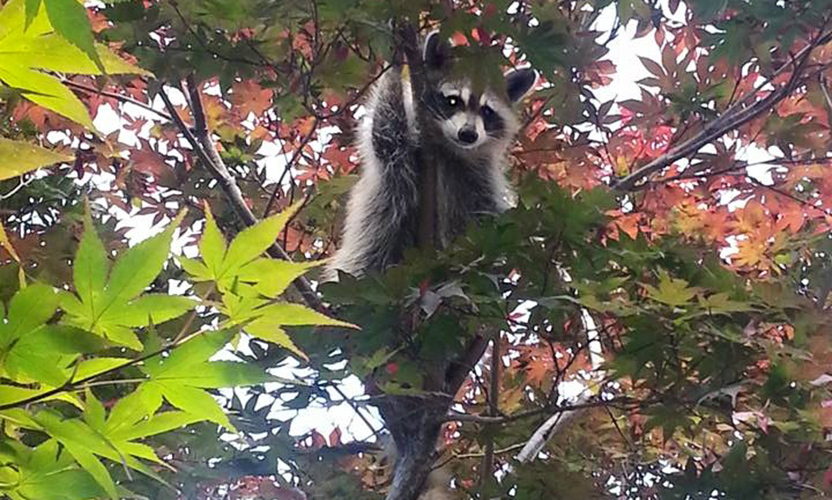
Raccoons are good and flexible climbers, and are able to move effortlessly on trees – can even go down a tree backwards or face first. They are very much at home in burrows and inside big trees with crevices. They den in those openings in tree trunks. Most of their activities are carried out at night and they do not hibernate during winter, but may sleep in their den for weeks at a stretch.
Physical adaptations that help the raccoon’s tree-dwelling ability include the shape of its limbs. The two hind legs are longer than the front legs, making it look hunched while running or climbing. And it has black paws that bear 5 toes each; the clawed toes on its front paws are very nimble and can grasp tree branches as well as food quite well. Its hands bears a resemblance to that of a monkey. Its long and opposable claws also help to achieve a firm grasp on the tree trunks and branches.
They also sleep on trees - Sleeping on trees is a natural for raccoons because they do live in the trees! Tree dwellers make their dens in side tree crevices and retire there for the night (or day, as they are nocturnal animals).
Sleeping on trees especially during the day however exposes them to predation from their natural enemies like foxes, eagles, and snakes.
In order to keep nuisance raccoons away from your property, homeowners must remove any tree with overhanging branches that are close to the roof to prevent easy roof access. Also trim and reduce any excess vegetation around your house or deck to reduce the amount of cover and hiding places.
To learn more about Do Raccoons Live In Trees or Sleep On Trees visit the Raccoons in the Attic home page.